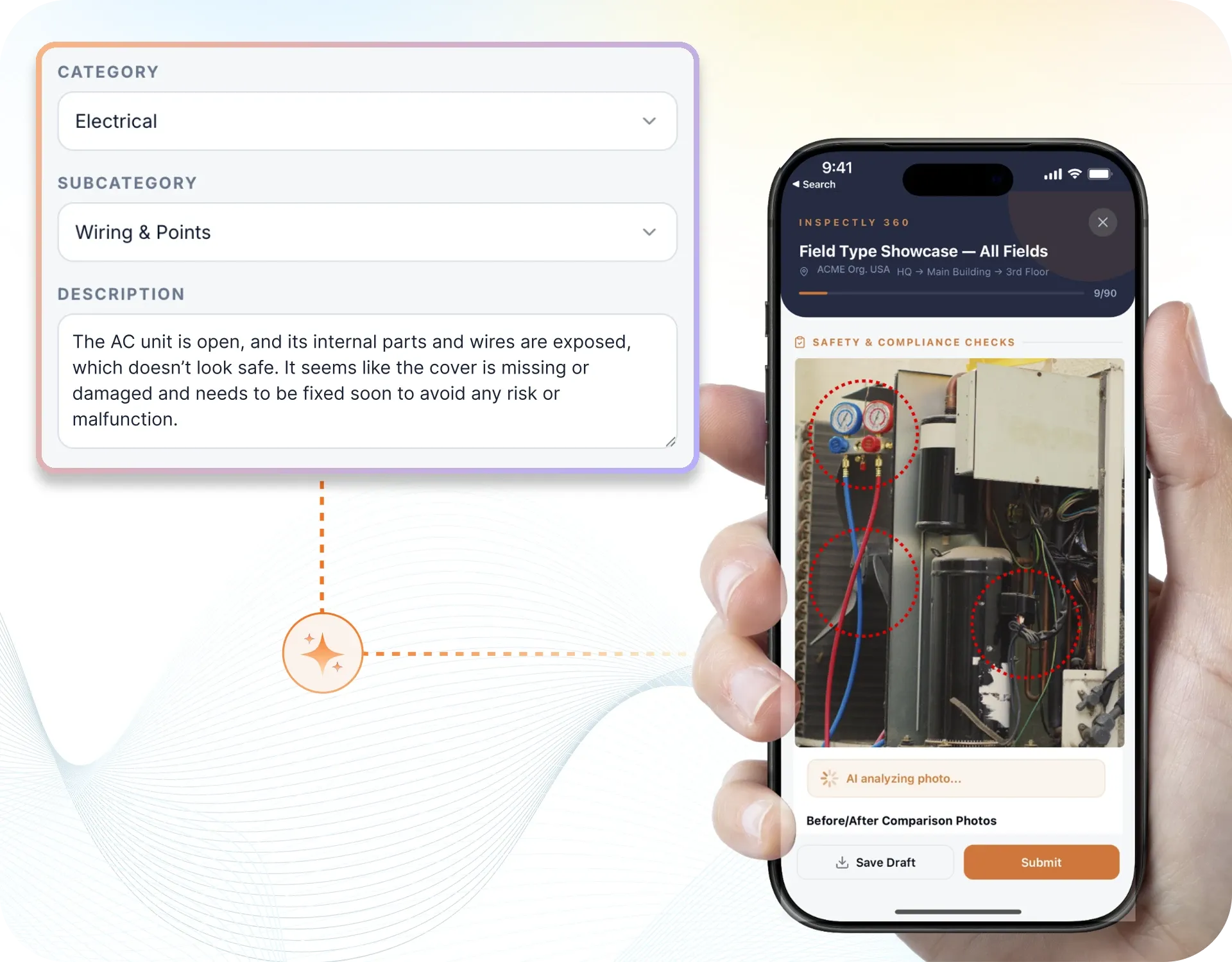
Take a Photo. AI Fills the Form
Your inspector takes a photo of any asset or defect. AI reads it and fills the inspection form automatically. No typing. No manual entry.

Convert your checklist into Mobile App
Building inspection software is the mobile and web platform that runs structured building inspections (condition reports, handover snag lists, fit-out completion checks, statutory inspections, defect liability period reviews) on phones and tablets rather than on Word templates and camera rolls.
Available on Mobile
Inspect on iOS and Android with no internet required. Capture photos, let AI flag defects, and generate audit-ready reports in the field.
The problem most building inspection programmes share is evidence drift. The inspection happens on site, but the photos sit in a camera roll, the snag list lives in Excel, the owner signature is on a separate PDF, and the report gets typed up three days later from memory. When a tenant raises a defect during the RERA liability period or an authority requests evidence, reconstruction takes days and contests assertion. Inspectly360 closes the drift by capturing photos, snags, signatures, and the report in one structured record on site.
What changes once building inspection software runs on one mobile-first platform.
Property managers, surveyors, and inspection firms typically follow this loop for unit turns, building handovers, and capital projects.
Condition reports, move-in and move-out, handover snag lists, fit-out completion, fabric inspection (cracks, damp, finishing), MEP commissioning, and statutory checks (fire NOC, lift, electrical, occupancy). Conditional logic adapts the inspection to building type and scope.
Capture in basements, new builds, parking decks, and lift shafts without connectivity. RICS-style condition scoring (1 for new, 5 for end-of-life) attaches to each element. Photos, voice notes, and signatures stay attached to the right room, asset, or building zone.
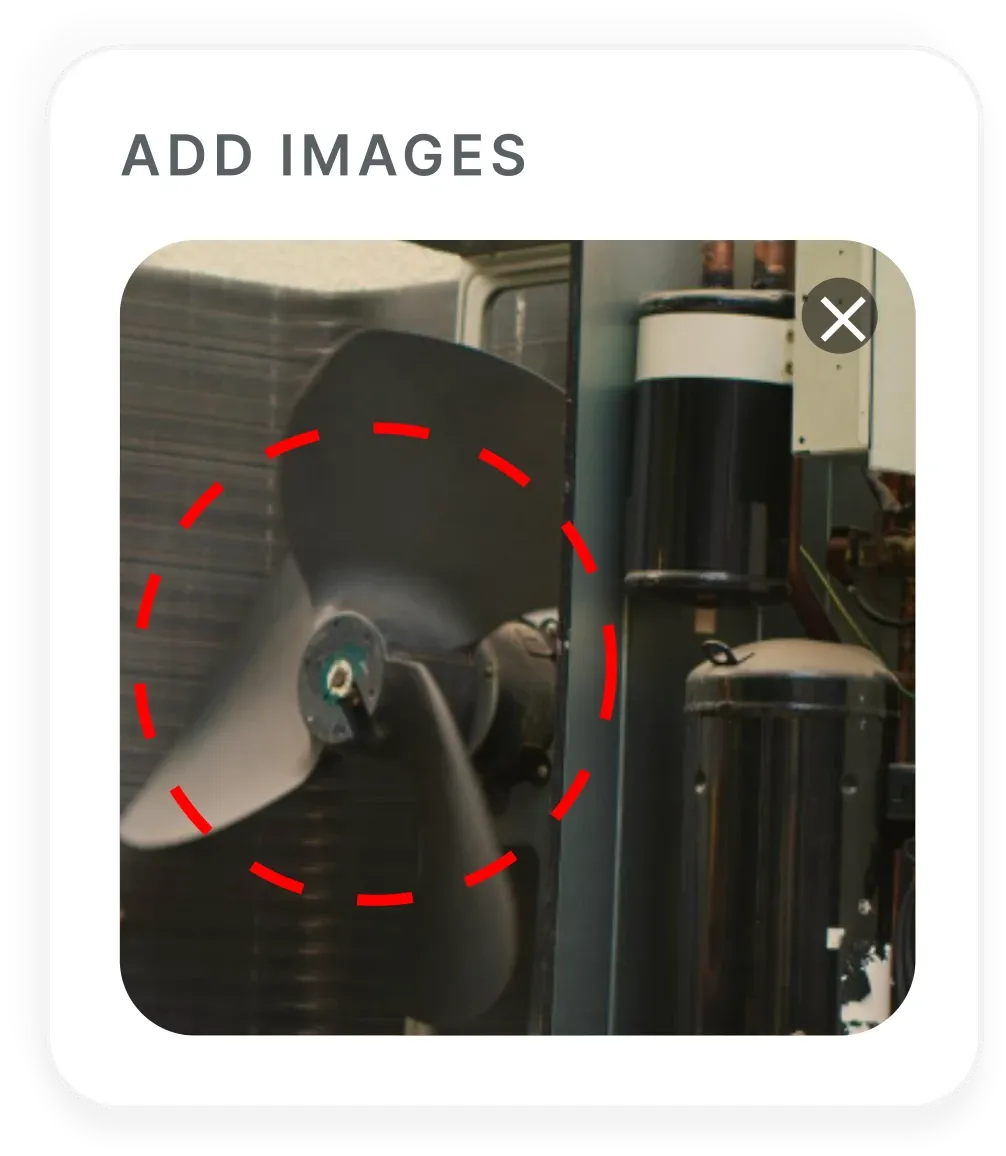
On-device AI suggests defect category (crack, damp, finishing defect, MEP issue) for inspector confirmation. Recurring defects across units, floors, or the building flag automatically so root-cause questions surface during the inspection.
Owners, tenants, surveyors, contractors, or main-contractor project teams review findings, annotate photos with markup, add comments, and sign digitally on site. RBAC keeps each party in their lane while sharing the same evidence.
Reports generate with photo indexes, condition scoring, fabric and MEP sections, open snags, and statutory annexes. Open defects begin their lifecycle (open, in-progress, in-verification, closed) with named contractors and deadlines.
Building inspection checks structure and fabric condition, fire and life-safety systems, MEP services and lifts, means of escape and exit access, accessibility and signage, and roof, facade, and external condition. Facilities and building managers capture a photo and a reading on each point, offline where signal is poor, and a named reviewer signs the round off, so every building record proves what was checked, when, and by whom, and stays aligned to National Building Code, fire safety NOC, and ISO 41001.
Templates align to National Building Code, fire safety NOC, ISO 41001.
Everything your field team does on paper, Inspectly360 does automatically: faster, more accurate, and without the admin.
Your inspector takes a photo of any asset or defect. AI reads it and fills the inspection form automatically. No typing. No manual entry.
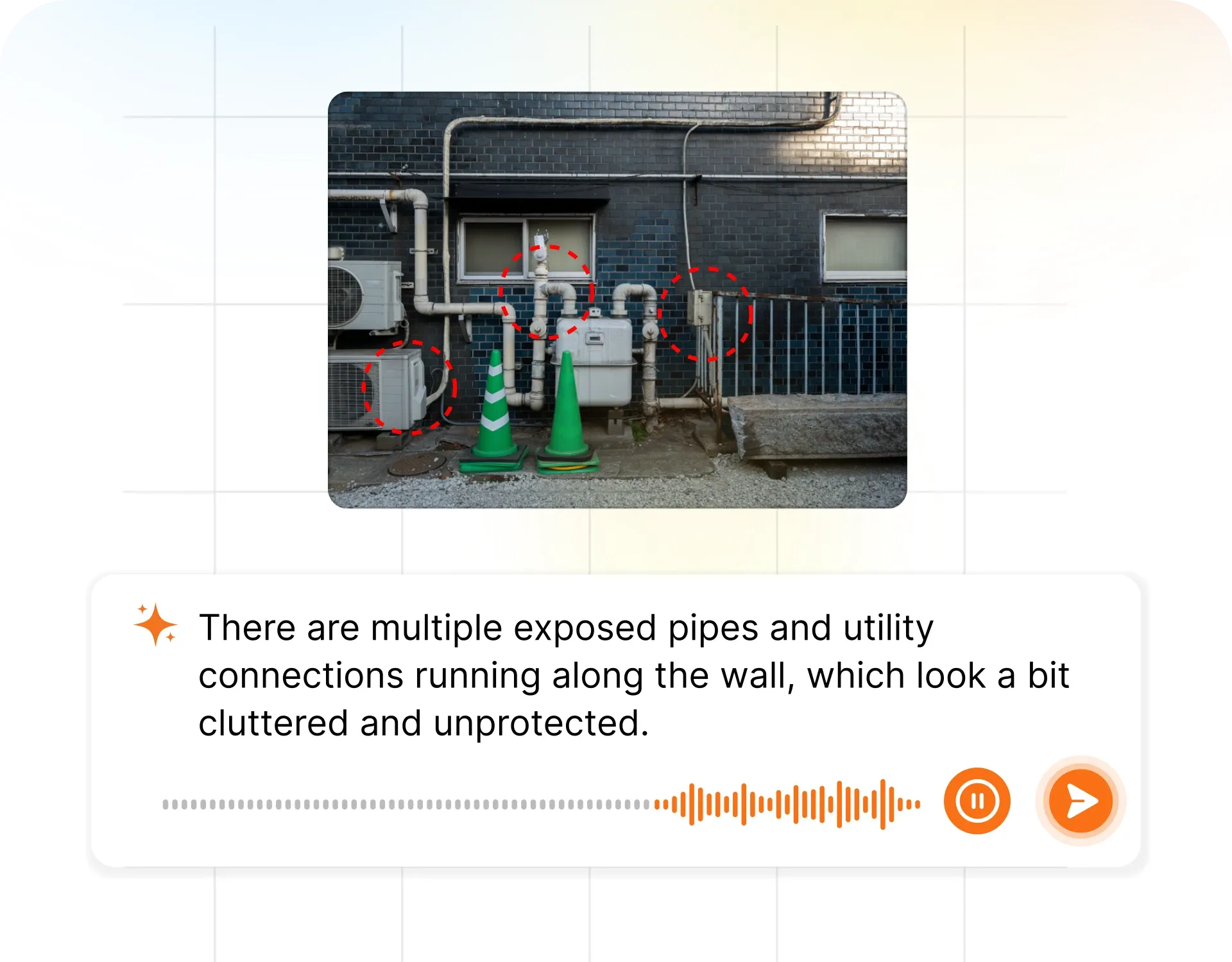
Inspectors speak their observations in any language. AI transcribes and fills the form in real time. Completely hands-free in the field.
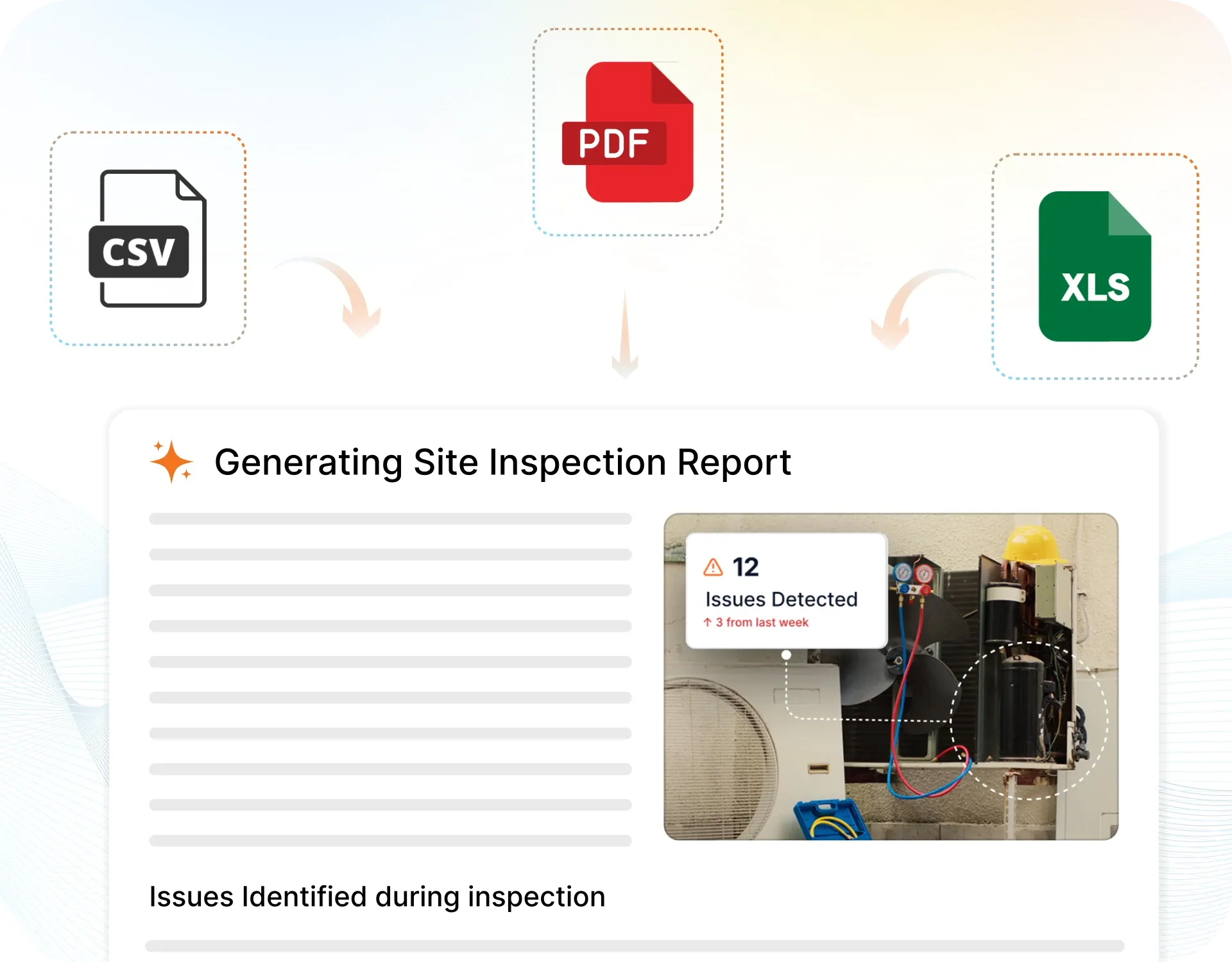
The moment an inspection is submitted, a branded PDF, Excel, or CSV report generates automatically. No manual work. No waiting.

Inspectly360 integrates with the tools your team already uses, including Zoho, Microsoft 365, and SAP. No double entry.
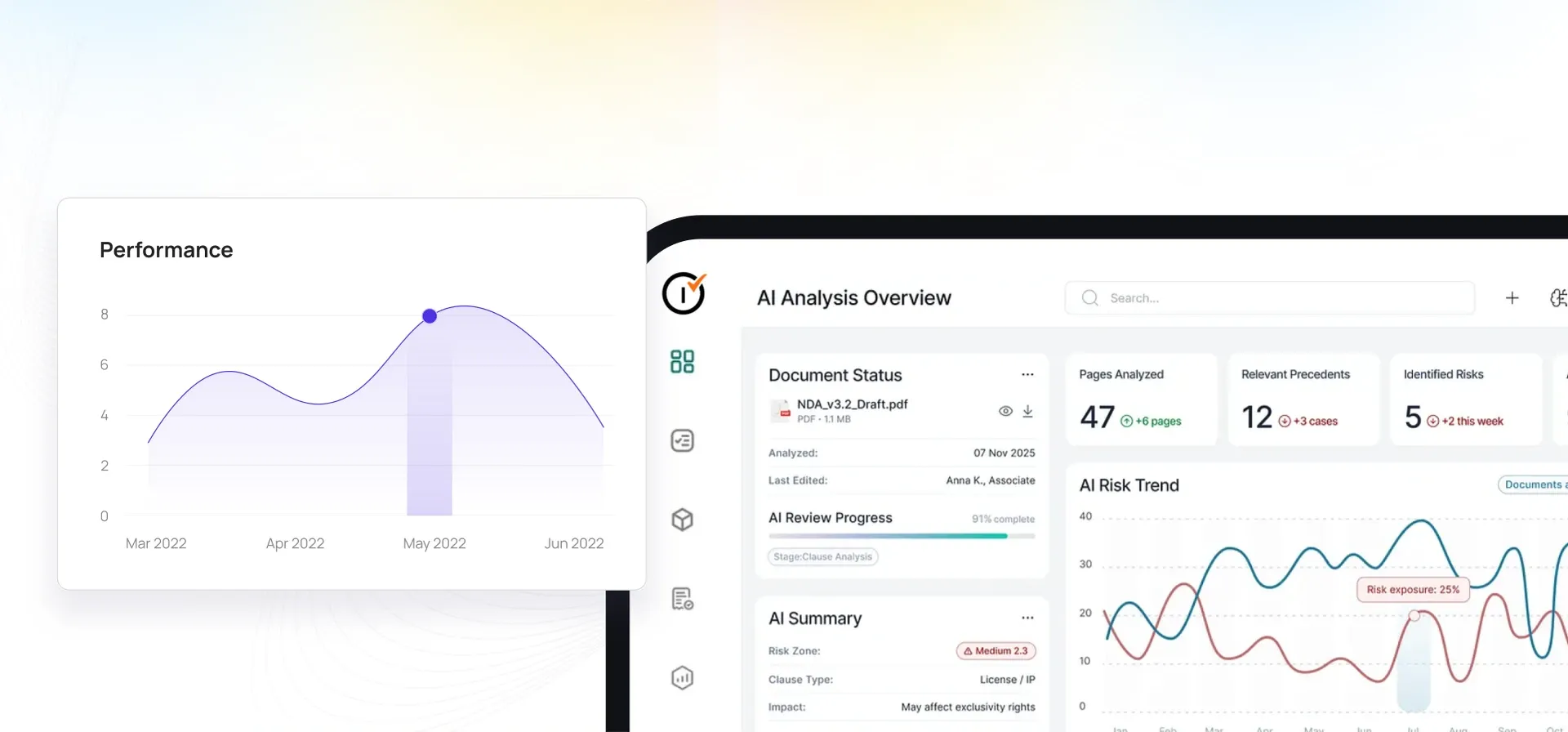
Your operations team sees completion rates, open issues, and compliance scores across all sites in real time. No chasing updates.
Manage every checklist in one connected workspace, capture evidence on mobile at the point of work, and let AI turn field inputs into clear, stakeholder-ready reports in minutes.

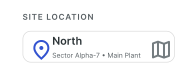
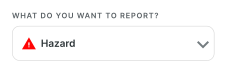
See which checklists your team has in progress across every site, jump into the same inspection with one tap, and keep field, supervisor, and back-office views in sync without sending screenshots on WhatsApp.


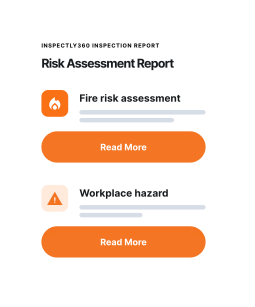
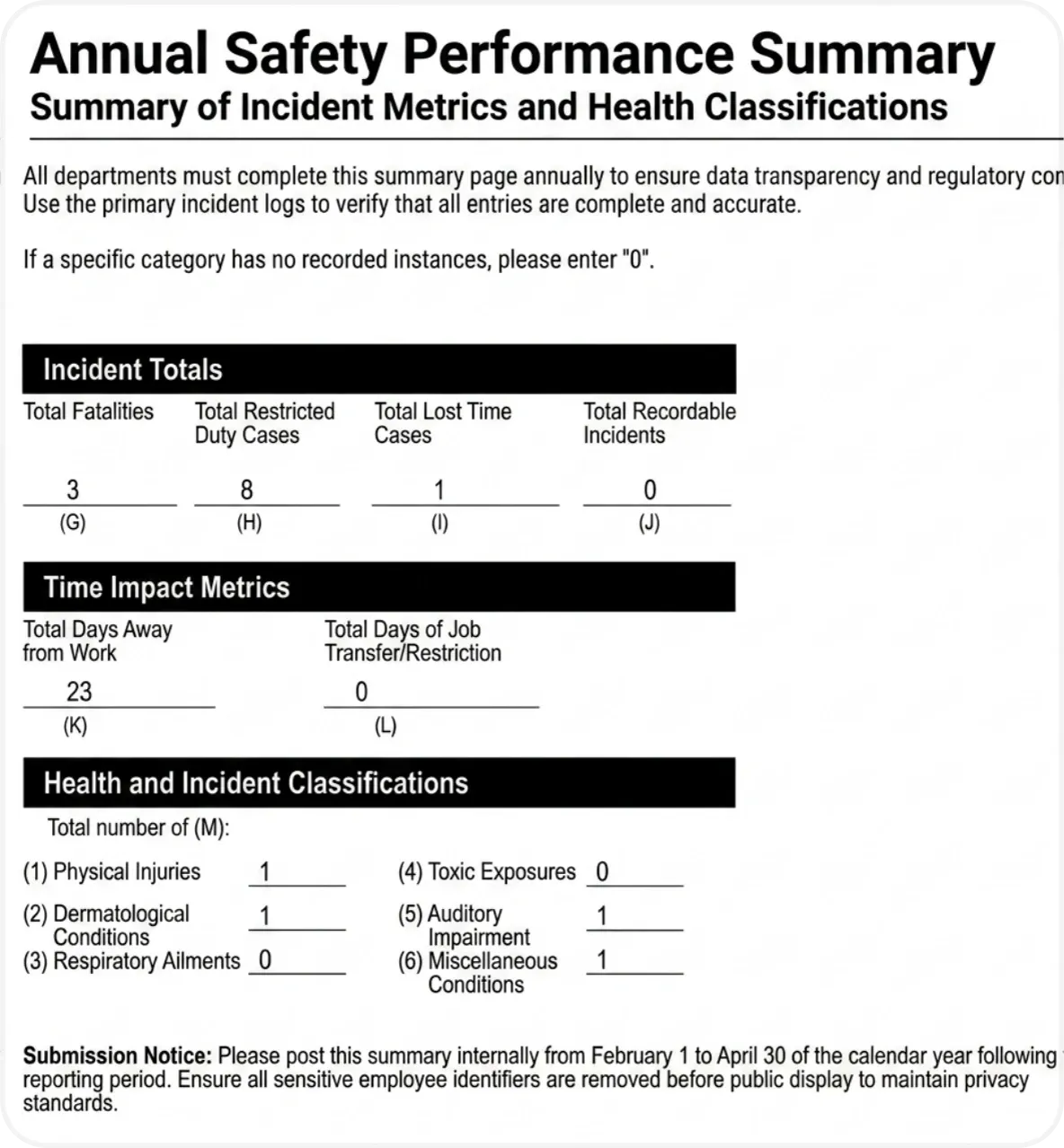


Every team reports differently. Build the report your operations, quality, or compliance leads actually want to read, share it as a branded PDF, and schedule delivery to the stakeholders who need it.

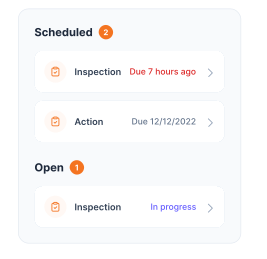

See completion, pass rate, and recurring findings across every checklist and every site, without pulling spreadsheets together at the end of the month.
What changes once building inspection software is standardised on Inspectly360.







“Inspectly360 transformed how we manage site safety inspections. The offline capability alone saved us countless hours. Our compliance rate jumped from 72% to 96% in just three months.”
Sarah Mitchell
Meridian Construction Group

“The AI-powered defect detection has changed how we work. Our inspectors capture photos and the system flags issues we'd have missed. It's like having an expert reviewer on every site visit.”
James Chen
Pacific Manufacturing Co.
“Rolling out digital checklists across multiple projects gave us instant visibility into recurring safety issues. We now resolve critical findings in hours instead of days.”
Olivia Carter
Northbridge Infrastructure
Get started with inspection and audit checklist templates.

This checklist is designed for conducting thorough workplace inspections to identify hazards and ensure compliance with safety regulations. It promotes...

This template is used to conduct a fire extinguisher inspection every 30 days to determine if the equipment meets the...
Use these apps to run inspections and audits.

by Inspectly360
Building condition and compliance inspections with evidence and follow-ups.

by Inspectly360
Property and real estate inspections, condition reports, and tenant checks.

by Inspectly360
Simplify facilities inspections with forms, photos, and reports.

by Inspectly360
Fire safety inspections with extinguisher, exit, and alarm checks.

by Inspectly360
Audits and inspections with scoring, evidence, and reports.
Inspectly360 ships with template packs for residential condition reports (room-by-room, fixtures, fittings, decoration condition), commercial condition reports (MEP, structural, fabric, statutory annexes), capital project handover (fit-out completion, snag list, as-built information), dilapidations (pre-tenancy baseline and end-of-tenancy comparison), and heritage condition (original-fabric integrity, conservation considerations). Each template is configurable per building type, per client, and per engagement scope. Surveyors can fork templates to add firm-specific methodology while keeping the underlying inspection engine intact. Custom templates can be built from scratch using the platform's form designer.
Yes. Condition scoring uses the standard 1-to-5 scale familiar to RICS practitioners: 1 for new or near-new condition, 2 for satisfactory, 3 for fair, 4 for poor or requiring attention, 5 for end-of-life or replacement required. Each scored element carries photo evidence, scoring rationale, and the inspector's identity. Reports follow RICS-aligned structure with executive summary, scope, methodology, condition schedule, and recommendations. Custom scoring schemes can be configured for firms or clients that use proprietary methodology. The platform is methodology-aware rather than methodology-prescriptive.
Raised defects move through a structured lifecycle: open (defect identified, contractor assigned, deadline set), in-progress (contractor acknowledged, work scheduled), in-verification (contractor uploaded closure evidence, awaiting owner or surveyor sign-off), closed (verified and signed off), and post-liability (defect closed and the contractual defects liability period has expired). Each state change records the actor, timestamp, and evidence. Defects raised within the contractual liability window stay flagged as 'within DLP' until either closed or the window expires. Late-raised defects are flagged as 'outside DLP' for owner-versus-contractor cost-allocation conversations.
Fabric and MEP inspections run as separate template sections within the same building inspection record. Fabric covers the building envelope (walls, roof, windows, doors), structural elements (load-bearing walls, beams, slabs), and finishing (decoration, fittings, fixtures). MEP covers mechanical (HVAC, lifts, pumps), electrical (panels, wiring, lighting, EICR), and plumbing (water systems, drainage, gas safety). Each section has its own scoring, evidence rules, and statutory annexes (EICR for electrical, gas safety certificate for gas, lift licence for lifts). The combined building report consolidates both into one record while letting MEP specialists work on their section independently.
Multi-party digital sign-off uses role-aware signature blocks. At handover, each party signs the findings relevant to their role: the main contractor signs accepting the snag list and the closure commitments, the owner signs accepting the handover with the snag list attached, the surveyor signs the independent condition certification, and the building manager signs the operational acceptance. Each signature is timestamped, identity-verified, and tied to the specific finding or section. Partial sign-off is supported (e.g. owner accepts handover but flags two snags for contractor follow-up). The audit trail records the full sign-off chain.
Yes. Dilapidations evidence runs as a structured workflow: pre-tenancy baseline capture (with full photo, condition scoring, and tenant-signed acceptance), interim inspections during the tenancy, and end-of-tenancy comparison (with photo overlay against baseline, condition score delta, and damage categorisation). The dilapidations report exports with the baseline-versus-end comparison, damage cost estimates if entered, and the photo evidence chain. This produces the structured evidence that dilapidations claims require: a defensible photo record of pre-tenancy condition rather than the post-hoc reconstruction that most disputes turn on.
See Inspectly360 in action with a live demo tailored to your needs. No credit card required.