
“Inspectly360 transformed how we manage site safety inspections. The offline capability alone saved us countless hours. Our compliance rate jumped from 72% to 96% in just three months.”
Sarah Mitchell
Meridian Construction Group

Convert your checklist into Mobile App
Looking for certificate of insurance tracking software built around how your risk team works? We provide it. Inspectly360 delivers a tailored COI tracking solution on our platform, configured to your coverage requirements and renewal cycles and integrated with the vendor and document tools you already use. Book a demo to scope it.
Certificate of insurance tracking software collects certificates of insurance, verifies coverage, and tracks expiration and renewals across vendors and contractors. Inspectly360 provides a COI tracking solution tailored to your operation, built on our workflow and records platform and configured to your coverage requirements and renewal cycles, integrated with the vendor and document tools you already use.
Without it, certificates of insurance sit in inboxes and folders. Coverage verification is skipped, expiration alerts do not exist, and a contractor works on site with lapsed cover that nobody noticed. When a claim or an audit arrives, the certificate cannot be found or was never valid.
Risk and compliance teams standardise this loop before scaling it.
Vendors and contractors submit their certificate of insurance, so collection is centralised rather than scattered across inboxes and folders.
Coverage verification checks each COI against your required limits and types, so a certificate that does not meet requirements is flagged, not filed.
Policy expiration tracking holds each certificate's dates, and insurance expiration alerts prompt renewal before cover lapses.
Reminders and requests go to vendors ahead of expiry, so contractor insurance tracking keeps cover continuous rather than lapsed.
Vendor insurance compliance status rolls up with an audit trail, so compliance tracking is provable to auditors and after a claim.
Inspectly360 is the COI collection, verification, and tracking layer. It links to vendor records and can feed compliance status to a broader risk or vendor management system, while owning the certificate lifecycle: collection, coverage verification, expiration, and renewal. It complements rather than replaces those systems, providing the specific insurance-compliance evidence they need.
Validate four things in the pilot. First, that your insurance requirements can be represented for coverage verification. Second, that collection reaches your vendors and contractors. Third, that expiration alerts and renewal chasing fit your timelines. Fourth, that the audit trail satisfies your insurers and auditors. Run one vendor group end to end, through collection, verification, and a renewal, so the process is proven before it scales.
COI records are risk evidence that may be needed years later, so retention and integrity matter. Inspectly360 enforces role-based access so teams manage their vendors' certificates and risk leads see compliance overall. Certificates, verifications, and renewals are logged and retained for the period your insurers and regulations require, so coverage can always be proven for any date.
What Certificate of Insurance Tracking Software covers for your team.
Risk leads comparing Inspectly360 to spreadsheets and inboxes see the difference on five points: collection, coverage verification, expiration control, renewal chasing, and audit readiness.
| Capability | Without Inspectly360 | With Inspectly360 |
|---|---|---|
| Collection | Certificates arrive by email and sit in folders, so nobody has a complete view of who has submitted one. | COI collection is centralised, so every vendor's and contractor's certificate is in one place and tracked. |
| Coverage verification | Certificates are filed without checking limits and types, so inadequate coverage passes unnoticed. | Coverage verification checks each COI against required limits, so inadequate cover is flagged, not filed. |
| Expiration control | Expiry dates are untracked, so a contractor works on site with lapsed insurance nobody caught. | Policy expiration tracking and insurance expiration alerts flag lapses before they happen, keeping cover current. |
| Renewal chasing | Renewals depend on someone remembering, so cover lapses between the old and new certificate. | Reminders chase renewals ahead of expiry, so contractor and vendor cover stays continuous. |
| Audit readiness | After a claim or audit, the relevant certificate cannot be found or was never actually valid. | Insurance records and an audit trail prove vendor insurance compliance on demand, before and after a claim. |
Manage every checklist in one connected workspace, capture evidence on mobile at the point of work, and let AI turn field inputs into clear, stakeholder-ready reports in minutes.


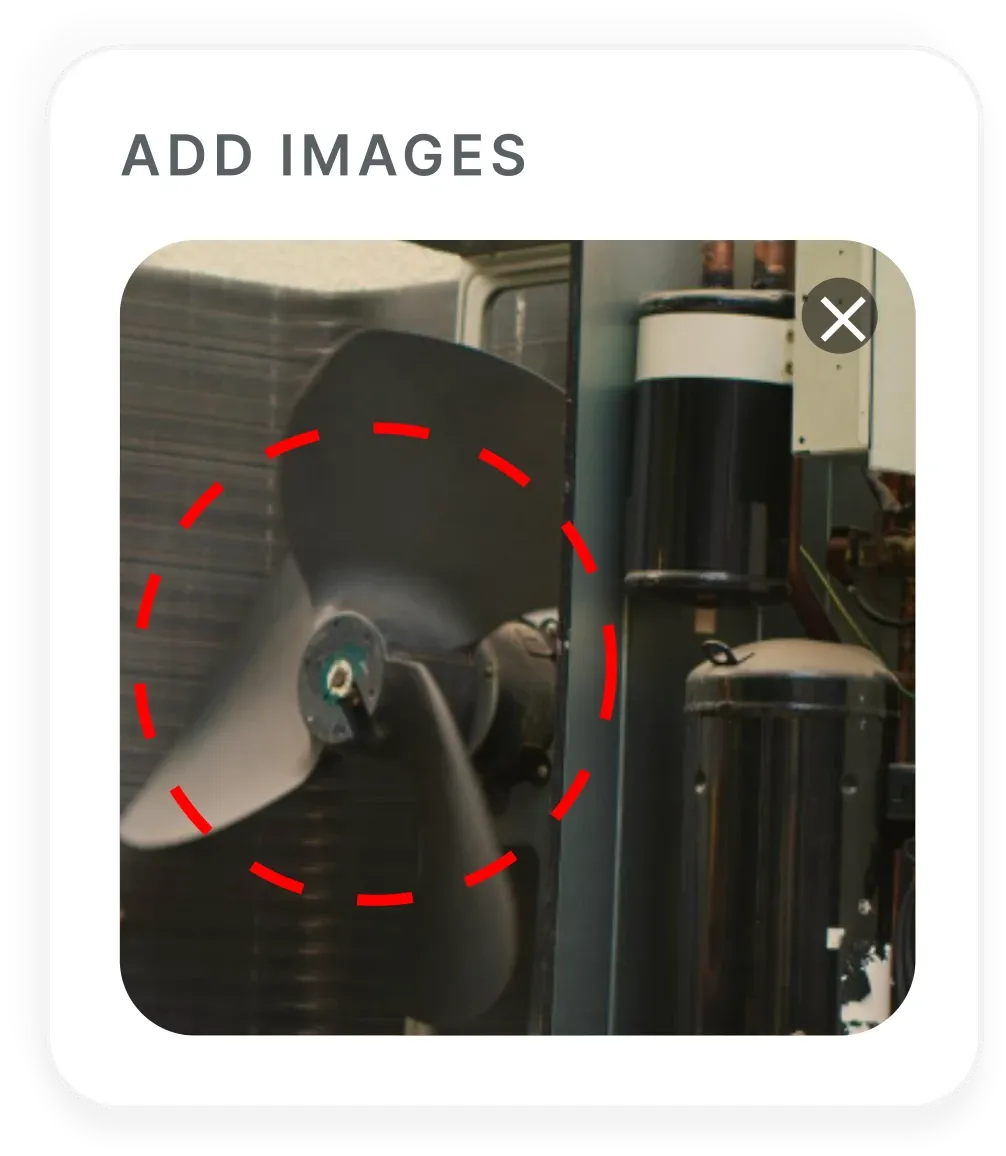
See which checklists your team has in progress across every site, jump into the same inspection with one tap, and keep field, supervisor, and back-office views in sync without sending screenshots on WhatsApp.


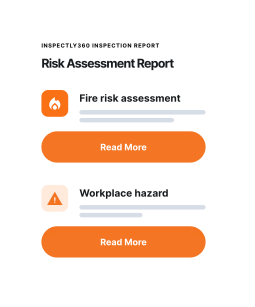
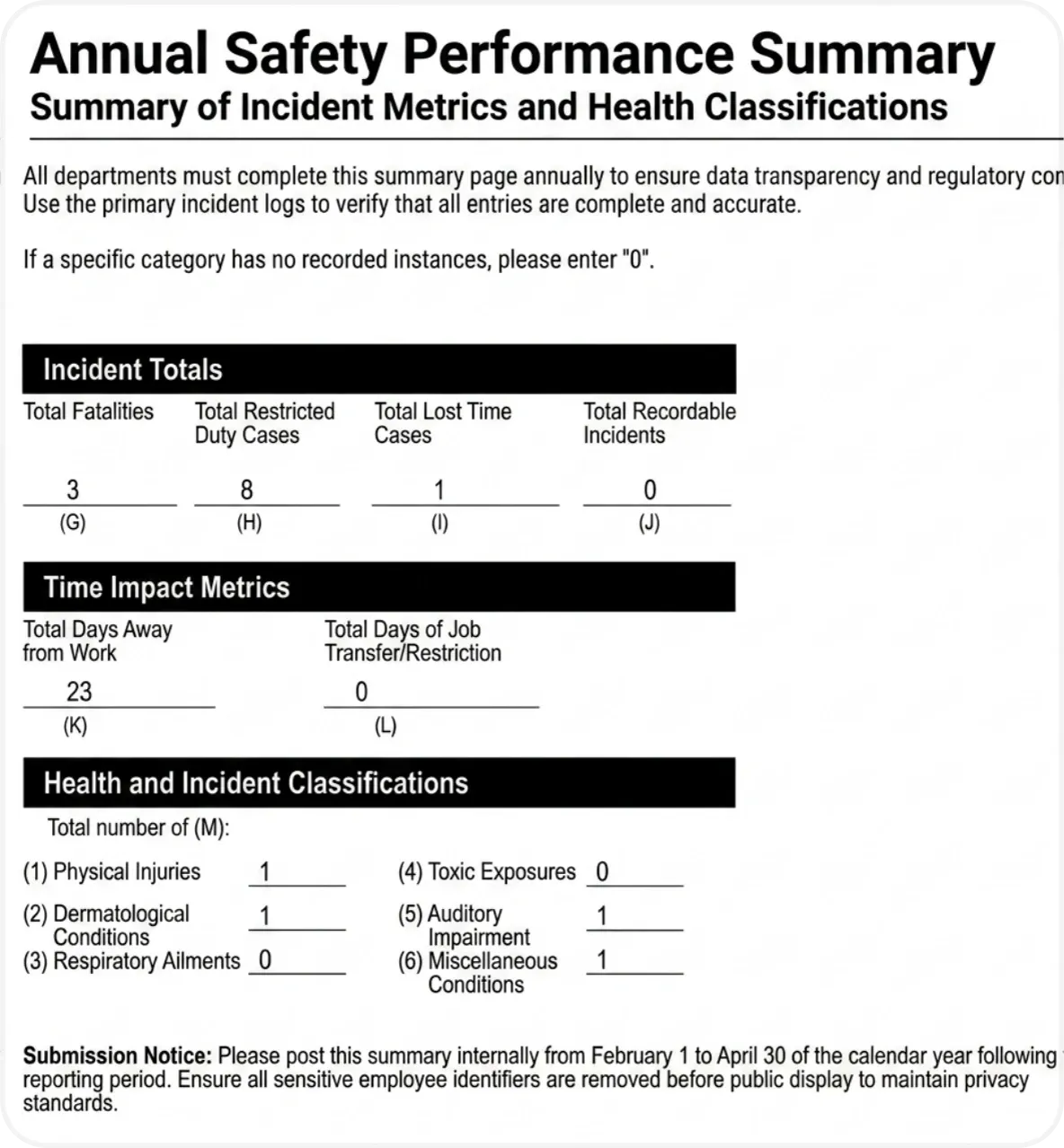


Every team reports differently. Build the report your operations, quality, or compliance leads actually want to read, share it as a branded PDF, and schedule delivery to the stakeholders who need it.

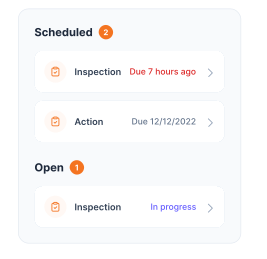

See completion, pass rate, and recurring findings across every checklist and every site, without pulling spreadsheets together at the end of the month.
What changes once certificate of insurance tracking software is standardised on Inspectly360.




“Inspectly360 transformed how we manage site safety inspections. The offline capability alone saved us countless hours. Our compliance rate jumped from 72% to 96% in just three months.”
Sarah Mitchell
Meridian Construction Group

“The AI-powered defect detection has changed how we work. Our inspectors capture photos and the system flags issues we'd have missed. It's like having an expert reviewer on every site visit.”
James Chen
Pacific Manufacturing Co.
“Rolling out digital checklists across multiple projects gave us instant visibility into recurring safety issues. We now resolve critical findings in hours instead of days.”
Olivia Carter
Northbridge Infrastructure
Get started with inspection and audit checklist templates.

Prepare emergency procedures for risks using this business continuity plan template. Identify the scope, business functions at risk and outline ...

Use this Cash count audit checklist to verify critical steps, capture evidence, assign corrective actions, and keep operations safe and compliant.
Use these apps to run inspections and audits.

by Inspectly360
Simplify facilities inspections with forms, photos, and reports.

by Inspectly360
Building condition and compliance inspections with evidence and follow-ups.

by Inspectly360
Digitize building inspection apps workflows with forms, evidence capture, and automated reporting.

by Inspectly360
Run building inspections on phones and tablets with offline forms, photo evidence, and instant reports.

by Inspectly360
Audit buildings with structured scoring, photo evidence, and corrective action tracking across portfolios.
It centralises the whole certificate of insurance lifecycle: collecting COIs from vendors and contractors, verifying that the coverage meets your required limits and types, tracking expiration dates, chasing renewals, and holding an audit-ready record of compliance. The aim is to ensure that everyone working with or for your organisation carries valid, adequate insurance at all times, and that you can prove it. Instead of certificates sitting unverified in inboxes and expiring unnoticed, COI management becomes a controlled process where inadequate or lapsed coverage is flagged before it becomes a liability. This matters most when a claim arises and you need to show a contractor was properly insured for the work they were doing.
Coverage verification checks each submitted certificate against the insurance requirements you set, for example minimum liability limits, specific policy types, and any additional insured or endorsement requirements. A certificate that does not meet those requirements is flagged rather than simply filed, so you know the vendor's coverage is inadequate before they start work rather than discovering it after an incident. This is the step that turns COI collection from an administrative exercise into genuine risk control, because a certificate on file means nothing if the coverage behind it is insufficient. Verification ensures that vendor insurance compliance reflects real, adequate protection matched to the risk of the work being performed.
Every certificate's expiration dates are tracked, and insurance expiration alerts flag certificates approaching expiry so renewals can be chased before cover lapses. Reminders go to the vendor or contractor and to your team ahead of the deadline, which closes the common gap where an old certificate expires and a new one has not yet been submitted. This directly addresses the core risk that COI tracking exists to manage: a contractor working on your site or for your organisation with lapsed insurance that nobody noticed. Continuous, monitored coverage means that if an incident occurs, the responsible party is insured, and you avoid inheriting a liability that should have sat with them.
Vendor management is the supporting context here, not the main subject. A certificate of insurance ties to the vendor or contractor it belongs to, so you can see coverage in the context of that relationship, but the depth of vendor onboarding, performance, and broader compliance lives in a dedicated vendor management page. Inspectly360 keeps this page focused on the certificate lifecycle, collection, verification, expiration, and renewal, because COI tracking has specific requirements that deserve dedicated attention. The two connect, so from a vendor you can see their insurance status and from a certificate you can reach the vendor, but the COI page does not try to be a full vendor database, which keeps insurance compliance clear and manageable.
Because every certificate is collected, verified, and tracked with an audit trail, you can produce proof of a vendor's or contractor's insurance status for any date on demand. After a claim, the critical question is often whether the responsible party was adequately insured at the time, and the records answer it directly. During an audit, compliance tracking shows which vendors hold valid, verified coverage and which do not. This turns a stressful search through inboxes and folders, where the relevant certificate may be missing or may never have been valid, into a straightforward report from live data, which protects the organisation both legally and financially when coverage is questioned.
See Inspectly360 in action with a live demo tailored to your needs. No credit card required.