
“Inspectly360 transformed how we manage site safety inspections. The offline capability alone saved us countless hours. Our compliance rate jumped from 72% to 96% in just three months.”
Sarah Mitchell
Meridian Construction Group

Convert your checklist into Mobile App
Looking for a medical equipment inventory management system built around how your clinical engineering team works? We provide it. Inspectly360 delivers a tailored medical equipment inventory solution on our mobile platform, configured to your departments and tags and integrated with the maintenance and CMMS tools you already run. Book a demo to scope it.
A medical equipment inventory management system tells clinical engineering and biomedical teams exactly what devices a hospital owns, where each one is, who owns it, and its status. Inspectly360 provides a medical equipment inventory solution tailored to your operation, built on our mobile platform, holding one live asset registry across every department and integrated with the maintenance tools you already run.
Most hospitals still keep equipment lists in spreadsheets that drift from reality the moment a device moves between wards. Nobody can say how many working syringe drivers exist, where the spare defibrillators sit, or which items left for repair and never came back. Audits and recalls then start with a physical hunt across floors.
Clinical engineering teams standardise this loop before extending it across sites.
Every device enters the medical asset registry with a unique identifier and a barcode or QR tag, capturing make, model, serial, and owning department at intake.
Each asset carries its current location, department, and responsible owner, so the register reflects where equipment actually sits rather than where it was bought.
Moves between wards, loans, and trips to repair update the record with a scan, so status is current and a device never quietly disappears.
Scheduled inventory audits are completed on a phone by scanning tags, so a floor is reconciled in minutes and discrepancies are flagged on the spot.
Live counts by department, status, and model let biomedical leads answer a recall or a capital review from the register instead of a building search.
A medical equipment inventory system tracks the identity, location, and status of every device a hospital owns. The scope below is what the register holds and reconciles, which is distinct from the preventive-maintenance schedule and the safety inspection that live in their own records.
Templates align to Joint Commission EC.02.04.01, AAMI EQ56, FDA UDI.
Inspectly360 is the mobile inventory and asset-visibility layer. Where a CMMS or biomedical maintenance system runs the service programme, devices in this registry link to their maintenance records rather than duplicating them. The register can feed asset data to finance and capital-planning systems, and pull nothing it does not need. The aim is one trusted answer to what equipment exists and where, which the maintenance, finance, and compliance systems can all rely on.
Validate four things during the pilot. First, that the registry fields match how your biomedical team classifies devices. Second, that tagging and scanning work at the bedside and in plant rooms without friction. Third, that department and location structures reflect how equipment actually moves in your hospital. Fourth, that mobile inventory audits reconcile against your existing list cleanly. Run one department end to end, including an audit, so the register is proven on real equipment before it scales across the estate.
Equipment data supports patient-care readiness and accreditation, so integrity and access matter. Inspectly360 enforces role-based access so a ward sees its own equipment and clinical engineering sees the estate. Changes and moves are logged, so a device's history is auditable for the retention period your accreditation and governance teams require, and the register can be exported for audits at any time.
What Medical Equipment Inventory Management System covers for your team.
Biomedical leads comparing Inspectly360 to spreadsheets see the difference on five points: register accuracy, device findability, movement history, audit speed, and recall readiness.
| Capability | Without Inspectly360 | With Inspectly360 |
|---|---|---|
| Register accuracy | A spreadsheet updated by a few people drifts from reality; nobody trusts the count of working devices by ward. | One live medical asset registry updates by scan, so device counts by department and status stay accurate. |
| Device findability | Finding a specific pump means calling wards and walking floors, and the search restarts every time it moves. | A search returns the device's current location, department, and status, so staff find equipment without a hunt. |
| Movement history | Loans and repair trips are unrecorded, so devices that leave a ward and never return are noticed months later. | Every move, loan, and repair trip updates the record, so a device's whereabouts and history are always visible. |
| Audit speed | An inventory audit is a clipboard walk reconciled by hand against a spreadsheet over days. | Inventory audits run by scanning tags on a phone, so a floor reconciles in minutes with discrepancies flagged. |
| Recall readiness | A device recall triggers a floor-by-floor search because no register can list every affected unit and its location. | Filter the register by model or lot to list every affected device and where it sits, so recalls start from data. |
Manage every checklist in one connected workspace, capture evidence on mobile at the point of work, and let AI turn field inputs into clear, stakeholder-ready reports in minutes.

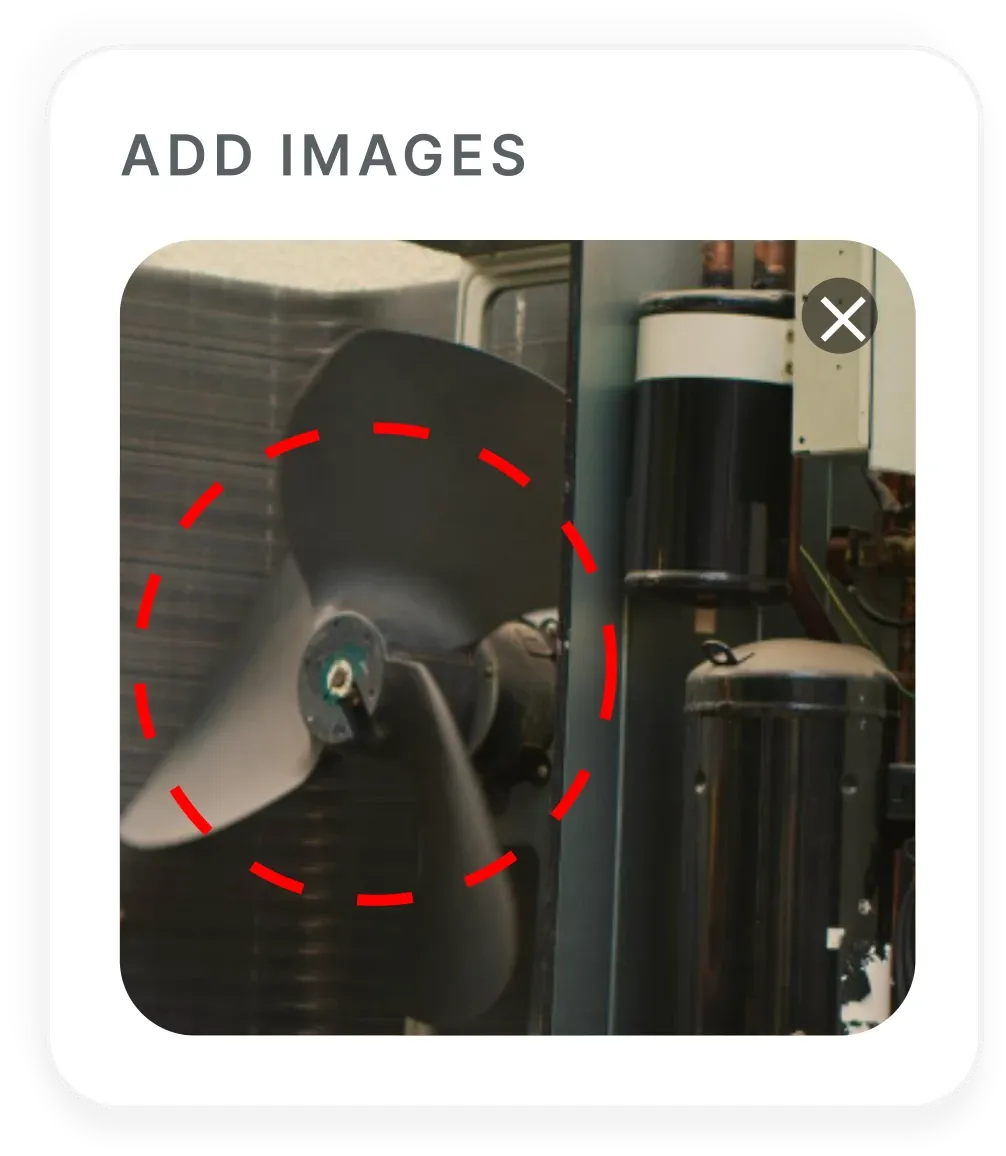
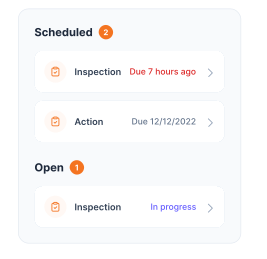
See which checklists your team has in progress across every site, jump into the same inspection with one tap, and keep field, supervisor, and back-office views in sync without sending screenshots on WhatsApp.


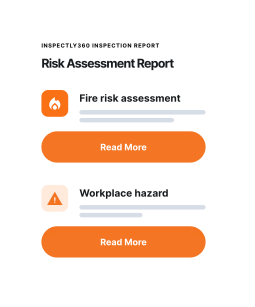
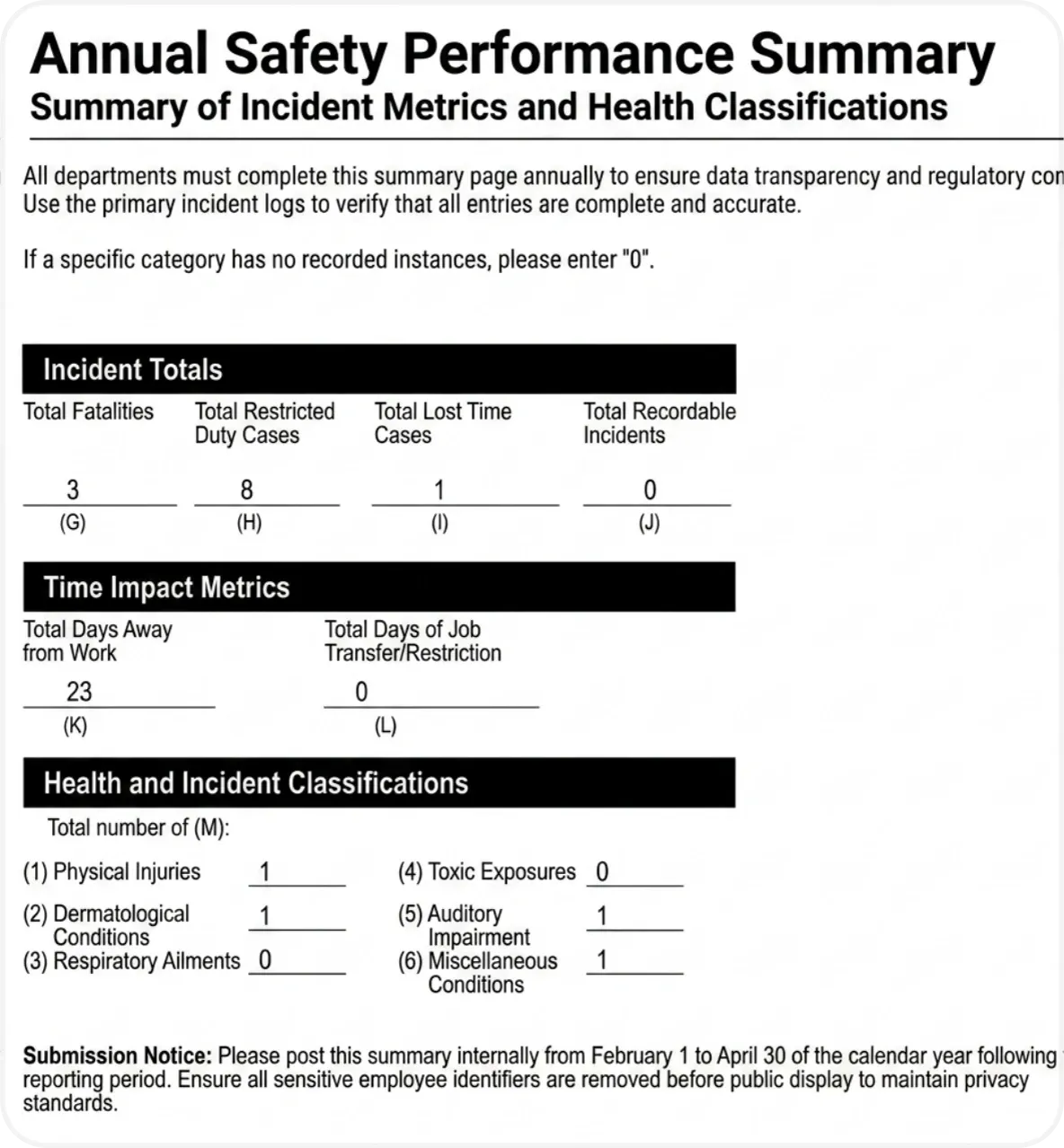


Every team reports differently. Build the report your operations, quality, or compliance leads actually want to read, share it as a branded PDF, and schedule delivery to the stakeholders who need it.


See completion, pass rate, and recurring findings across every checklist and every site, without pulling spreadsheets together at the end of the month.
What changes once medical equipment inventory management system is standardised on Inspectly360.





“Inspectly360 transformed how we manage site safety inspections. The offline capability alone saved us countless hours. Our compliance rate jumped from 72% to 96% in just three months.”
Sarah Mitchell
Meridian Construction Group

“The AI-powered defect detection has changed how we work. Our inspectors capture photos and the system flags issues we'd have missed. It's like having an expert reviewer on every site visit.”
James Chen
Pacific Manufacturing Co.
“Rolling out digital checklists across multiple projects gave us instant visibility into recurring safety issues. We now resolve critical findings in hours instead of days.”
Olivia Carter
Northbridge Infrastructure
Get started with inspection and audit checklist templates.

Test medical-gas alarms: area and master alarms, alarm activation, audible and visual indicators, pressure conditions, sensor response, and panel status, with test results.

Inspect pulse oximeters for operational readiness: device identification, physical condition, display and controls, SpO2 sensor, probe and cable, battery and power, alarm functionality, cleaning and disinfection, and a functional oxygen-saturation readout check, with corrective actions.
Inspect glucometers and their testing components: device identification, physical condition, display and buttons, battery, test-strip condition and storage, control-solution verification, cleaning and contamination checks, and error indicators, with corrective actions.
Inspect the autoclave or steam sterilizer as equipment: chamber condition, door, locking mechanism and gasket, pressure and temperature indicators, controls and cycle settings, alarms, water supply and drainage, leaks and corrosion, cycle records, and sterilization indicators.
Use these apps to run inspections and audits.

by Inspectly360
Simplify facilities inspections with forms, photos, and reports.

by Inspectly360
Building condition and compliance inspections with evidence and follow-ups.

by Inspectly360
Digitize building inspection apps workflows with forms, evidence capture, and automated reporting.

by Inspectly360
Run building inspections on phones and tablets with offline forms, photo evidence, and instant reports.

by Inspectly360
Audit buildings with structured scoring, photo evidence, and corrective action tracking across portfolios.
This is inventory software, focused on knowing what equipment exists, where it is, who owns it, and its current status. Medical equipment maintenance software manages the service programme: preventive maintenance schedules, work orders, and repair history. The two connect, and Inspectly360 links each device in the registry to its maintenance record, but they answer different questions. If your problem is that nobody can find a device or trust the count of working units by ward, you need the inventory system. If your problem is keeping planned maintenance on schedule, that is the maintenance page. Most biomedical teams run both, with inventory as the register the maintenance programme depends on.
Each device is tagged with a barcode or QR label tied to its record in the medical asset registry. Staff scan the tag with a phone to look up a device, update its location, record a move or a loan, or mark it as sent for repair. Because the update is a scan rather than a spreadsheet edit at a desk, the register reflects reality on the floor instead of drifting from it. This is the core of biomedical asset tracking: the identity is fixed to the device, and every interaction with it updates one shared record that everyone, from the ward to clinical engineering, sees the same way.
Yes. The registry is built for a hospital or a group where devices move between wards, departments, and even buildings. Each asset carries its owning department and current location, and role-based access lets a ward see its own equipment while clinical engineering sees the whole estate. As a hospital equipment inventory software and medical asset tracking system, it rolls counts up by department, model, and status so a biomedical lead sees the full picture and a ward sees theirs. Movement between departments is a scan, so the register stays accurate even when equipment is shared or loaned across teams during demand peaks.
An inventory audit becomes a scanning walk rather than a clipboard-and-spreadsheet reconciliation. Staff scan the tags on a floor, and the system checks each against the expected register, flagging anything missing, extra, or in the wrong location. A floor that used to take days to reconcile is completed in a session, and the discrepancies are recorded for follow-up rather than lost. Because audits are quick, they can be run more often, which keeps the register trustworthy over time. Accurate, regularly audited healthcare equipment tracking is also what auditors and accreditation bodies expect to see, so the same work supports compliance.
Yes, and this is one of the strongest reasons to hold an accurate register. When a manufacturer issues a recall for a model or lot, the biomedical team filters the medical asset registry to list every affected device and its current location and status, then drives the recall action from that list. Without a trustworthy register, a recall means a floor-by-floor physical search with no certainty that every unit was found. With one, the affected devices are identified in minutes and tracked through quarantine or removal to a documented resolution. The same registry that supports day-to-day findability is what makes a recall defensible and fast.
See Inspectly360 in action with a live demo tailored to your needs. No credit card required.